On making models at Morphosis: models as the medium, not simply representation.
Morphosis Models
I came to Los Angeles expressly to work for Thom Mayne in 2002. My introduction to the process of design at Morphosis was made through an intense period of experimentation with models. Materials, methods, mixing, and matching. Molds of silicone, landscapes and beacons of resin and fiber glass with miniature fluorescent and neon lighting. Acid-etched stainless steel skins with stone powder bones, chemically induced patinas, laser cut plastics and acrylics, metal plating, and the first wave of 3D printing.
Floating planes on triangulated steel legs. Hot glued sheets of paper laminated foam, plywood and model paste. Museum board filigree. Skins, shells, layers. Pistons, actuators, strings moving structures like a marionette. Lift and shear. Prototyping. Walls for 6th Street. Lanterns for San Francisco. Books for Madrid.
Models about and for architecture.
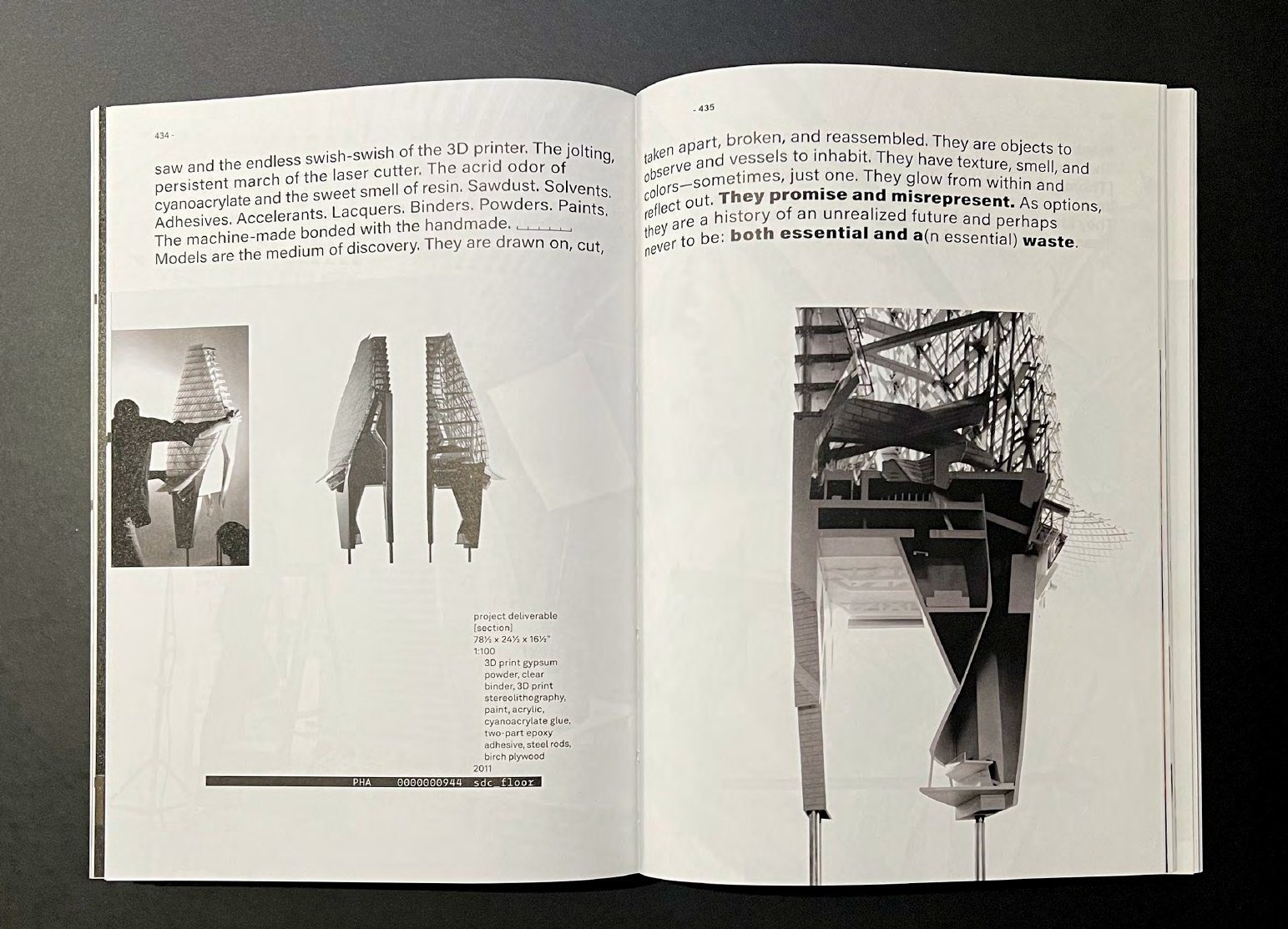
The act of making is a deeply sensorial experience. The familiar roar of the table saw and the endless swish-swish of the 3D printer. The jolting, persistent march of the laser cutter. The acrid odor of cyanoacrylate and the sweet smell of resin. Saw dust. Solvents. Adhesives. Accelerants. Lacquers. Binders. Powders. Paints. The machine-made bonded with the hand-made.
Models were the keystone in Morphosis’ communication – internal and outwardly to clients and the world. And so, around the world, we hauled them. Containers were designed that rivaled the content. Windows, wheels, handles, hold-downs, straps, and stenciled labels. In the trunks of taxis, passing through airport x-rays, knocked, shaken and sniffed, jammed in the overhead bin or below cabin (never checked!), towed across the Frankfurt tarmac and onto the next plane. Running through another airport hoping the resin will cure in time. Unpacked and spread onto the conference table. Will the insert for the new design fit? Keep the sandpaper handy. So it goes.
I learned from Thom that models were beyond simple representation. Models were the medium. They were to be drawn on. Cut. Taken apart. Broken and reassembled. They were objects to observe and vessels to inhabit. They had texture. Smell. Color… sometimes. Maybe one. They glowed from within and reflected without. They were books. They promised and misrepresented. Possibilities and options. They are a history of a future unrealized and perhaps never to be. They are both essential and a(n essential) waste. A record of paths not taken. The beginning, middle and complete. But perhaps with a few new modifications. A way to see time unraveled. To have a second, or a fifth, chance.
The models we built were integral to everything. The analogue ran parallel with the digital, intertwined. With the expansion of the purely digital, more of the iteration and ‘modeling’ can happen before any materialization. Direct three-dimensional printing and rapid prototyping can replace much of the old handiwork in the name of efficiency. To become simply an end. This is a fundamental loss. We need to take care and not lose what makes Architecture — and Morphosis in particular — magic.